6 Breeds That Excel at Learning Tricks
A look at six breeds known for trainability, why they take to tricks so readily, and how to train them well.
Dogs of nearly every breed can learn tricks, but the 6 breeds that excel at learning tricks tend to combine attentiveness, eagerness to work with people and a history of jobs that rewarded responding to human direction. The Border Collie, Poodle, German Shepherd, Golden Retriever, Labrador Retriever and Australian Shepherd are frequently mentioned in obedience, agility and trick training circles, and several of them sit near the top of the rankings in Stanley Coren’s widely cited book The Intelligence of Dogs. Breed is a guide rather than a guarantee, though, because individual temperament, early socialization and training methods matter at least as much as ancestry. This article looks at why each of these breeds is so often linked with trick training and what owners should keep in mind when teaching them.
What Makes a Dog Good at Learning Tricks

Trick training draws on several qualities at once: the ability to pay attention to a handler, the memory to link a cue with an action, the motivation to work for a reward and the physical coordination to perform the behavior. Breeds developed to herd livestock or retrieve game for hunters were selected over generations for close cooperation with people, which helps explain why working and sporting breeds dominate most lists of quick learners.
Coren’s The Intelligence of Dogs, published in 1994, ranked breeds using surveys of obedience judges. It reflects how quickly breeds tend to learn new commands and obey them, which is often described as working or obedience intelligence. It is not a complete measure of everything a dog can do, and it describes breed tendencies rather than any individual dog.
Training approach also plays a major role. Many professional trainers and organizations such as the American Kennel Club favor reward-based methods, in which a dog is given something it values, such as a treat, toy or praise, right after performing the desired behavior. The American Kennel Club also runs a Trick Dog title program, which gives owners a structured way to practice and recognize the tricks their dogs learn.
Border Collie, the Classic Herding Thinker

The Border Collie takes its name from the border region between England and Scotland, where the breed was developed to herd sheep. Coren’s ranking placed it first for working and obedience intelligence. Herding work requires a dog to read subtle movements, respond to hand signals or whistles and make decisions at a distance, and those same skills transfer readily to trick training.
Border Collies are also known for high energy and a strong drive to work. Owners are commonly advised that these dogs need substantial physical exercise and mental stimulation, and that a bored Border Collie may invent its own activities. Trick training can serve as a useful outlet, particularly for behaviors that involve movement, such as spins, weaving between the legs and retrieving named objects.
Poodle, a Versatile Performer

The Poodle comes in three recognized sizes, Standard, Miniature and Toy, and the Standard is generally described as having originated as a water retriever. Coren ranked the Poodle second, and the breed has a long association with performing, from obedience rings to entertainment. Its willingness to work with a handler and its quick uptake of cues make it a common choice for trick training.
One practical advantage is that the size varieties allow people living in different kinds of homes to choose a dog that fits. Poodles are typically described as people-oriented, and they often thrive when training sessions are lively and varied. Tricks that require balance, such as standing on hind legs or walking backward, can suit their athletic build, though owners should always match the difficulty of a trick to the individual dog’s physical ability.
German Shepherd, a Dog With a Job

The German Shepherd was developed in Germany in the late nineteenth century as a herding dog and later became closely associated with police, military, search and rescue and service work. Coren ranked it third. The breed’s reputation rests on its ability to learn complex tasks and to form a strong working partnership with its handler.
Because the breed is often described as intelligent, confident and protective, early socialization is generally recommended alongside trick training. Many German Shepherds enjoy tasks that combine thinking with action, including scent-based games, retrieving and tricks that build on obedience basics. Consistent, fair and reward-based instruction tends to work well for a breed that thrives on having a clear role.
Golden Retriever, Eager to Please

The Golden Retriever was developed in Scotland in the nineteenth century to retrieve game, and Coren placed it fourth in his ranking. Retrievers were bred to work closely with hunters and to carry game gently, and that cooperative, people-focused temperament is a major reason the breed is so often used as a guide, assistance and therapy dog.
In trick training, Golden Retrievers are commonly described as friendly, motivated by food and praise and generally tolerant of repetition. These traits suit tricks built around fetching, carrying and gentle handling, such as picking up dropped items or closing a door. Their enthusiasm can make them easily distracted in busy settings, so beginning in a quiet room and gradually adding distractions is a widely recommended approach.
Labrador Retriever, a Willing Learner

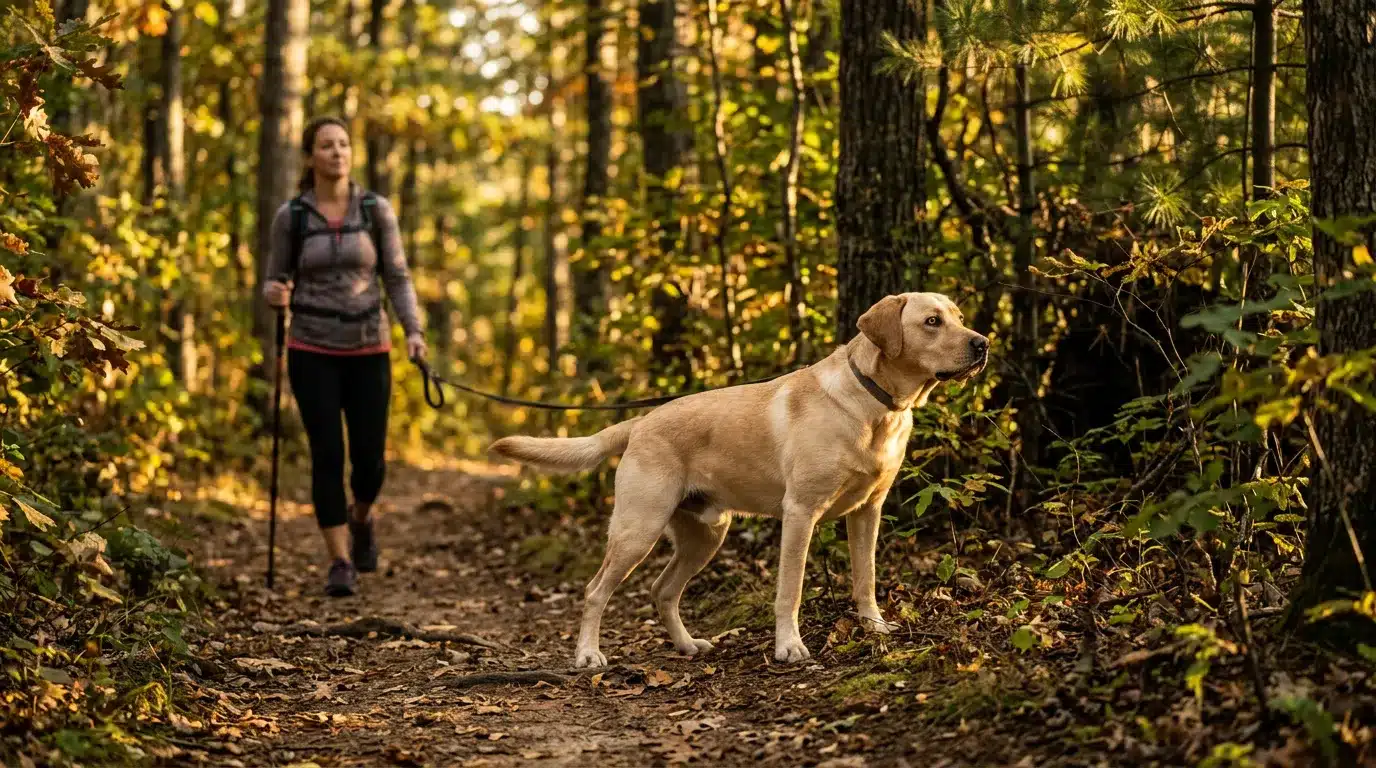
The Labrador Retriever traces its roots to Newfoundland, with the modern breed developed in Britain as a retriever. It also appears in the upper part of Coren’s ranking, within the top ten. The breed has frequently been listed among the most popular in the United States, and its trainability is a large part of its appeal as both a family companion and a working dog.
Labradors are generally known for being food motivated, which can make treat-based training especially effective. That same trait calls for some care, since frequent treats add calories. Owners can use small pieces, count training treats as part of daily food or reward with toys and praise. Retrieving tricks, nose-targeting and tricks that involve carrying objects tend to suit the breed’s natural inclinations.