Ensuring the kitchen is a safe space for dogs involves more than just keeping the floor clean from food scraps. It’s about creating an environment where hazards are minimized, and your furry companion can navigate safely without the risk of injury or ingesting something harmful. This guide delves into the essential steps to dog-proof your kitchen, ensuring that every nook and cranny is accounted for. From understanding your dog’s behavior to securing trash and hazardous items, the following insights will help you establish a secure and pet-friendly kitchen area.
Understanding Your Dog’s Kitchen Habits

Dogs are naturally curious creatures, and the kitchen can be a wonderland of smells and tastes for them. This curiosity, however, can lead them into trouble if not monitored. It’s crucial to observe which items in the kitchen attract your dog the most. Is it the trash can they always tip over or the countertop where they scout for leftovers? Recognizing these patterns is the first step in dog-proofing the kitchen. Once you know what catches your dog’s attention, you can take specific measures to mitigate risks, such as moving tempting items out of sight or creating barriers to off-limit areas.
Understanding these habits also involves recognizing the times your dog is most likely to explore the kitchen. Is it during meal preparation, immediately after the family has dined, or when the kitchen is quiet and empty? By identifying these times, you can create a routine or set up preventive measures like crating or using baby gates during high-risk periods. This proactive approach not only prevents mishaps but also helps in training your dog to understand the boundaries within the home.
Secure Your Trash Can
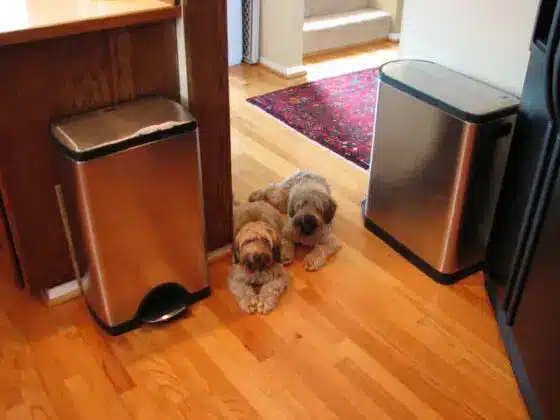
The trash can is a treasure trove for dogs, filled with smells and potential “snacks” that they find irresistible. Unfortunately, it’s also a source of potential danger, exposing dogs to harmful foods and sharp objects. To combat this, consider investing in a sturdy trash can with a locking lid or a mechanism that makes it difficult for a dog to open. Alternatively, placing the trash can in a latched cabinet or designing a storage area under the sink can keep it out of the reach of curious canines.
If a dog-proof trash can isn’t an option, there are other measures to secure your existing one. Weighing down the bottom of the trash can, using adhesive strips to attach it to the floor, or employing a trash can with a sensor that opens with a hand wave can deter a dog’s attempts to rummage through the garbage. It’s about creating an environment where the trash is inaccessible, removing the temptation and the danger in one fell swoop.
Store Hazardous Items Out Of Reach

Kitchens are full of items that can be hazardous to dogs, including cleaning supplies, certain foods, and small utensils that can be choking hazards. It’s imperative to store these items out of your dog’s reach. High shelves or cabinets with child-proof locks are excellent places to keep dangerous items. For lower cabinets, especially those under the sink where cleaning supplies are often stored, secure them with safety latches that a dog cannot easily open.
In addition to securing hazardous items, it’s also important to be mindful of food placement. Foods like chocolate, grapes, and onions are toxic to dogs and should never be left within their reach. This might mean reevaluating storage for commonly used items or establishing a specific “dog-safe” zone in the pantry. Regularly check these areas to ensure that nothing dangerous has been inadvertently left within your dog’s reach, maintaining a safe zone that your pet cannot breach.
Choose Dog-Safe Plants And Decor

While adding greenery and decor can enhance the kitchen’s ambiance, it’s vital to choose plants and decorations that are safe for dogs. Many common houseplants, such as lilies and aloe vera, can be toxic if ingested by pets. Opt for dog-safe alternatives like basil, thyme, or African violets, which can add a touch of nature without the risk. Always check the ASPCA’s list of non-toxic plants before bringing new greenery into your home to ensure they pose no threat to your dog.
Decorations in the kitchen should also be considered with your dog’s safety in mind. Avoid small, breakable items that could be swallowed or cause injury if shattered. Ensure that any hanging decor is securely fastened and out of tail-wagging range. By choosing your kitchen decor thoughtfully, you not only create a stylish space but also ensure that it’s a safe environment for your dog to inhabit.