Balanced Diet And Hydration

What a dog eats can have a significant effect on their energy levels and behavior. Consuming a balanced diet provides a dog with the right amount of energy for their daily activities without leading to spikes in hyperactivity. It’s also essential to monitor the quantity to avoid overfeeding, which can contribute to excess energy and weight issues.
Hydration, too, plays a crucial role in a dog’s overall health and energy levels. Dehydration can lead to lethargy, but it can also sometimes manifest as restlessness or hyperactivity. Ensure that fresh water is always available, especially during and after physical activities. Treats can be a nice reward, but they should be given in moderation and shouldn’t replace a balanced, nutritious diet.
Training And Obedience Classes

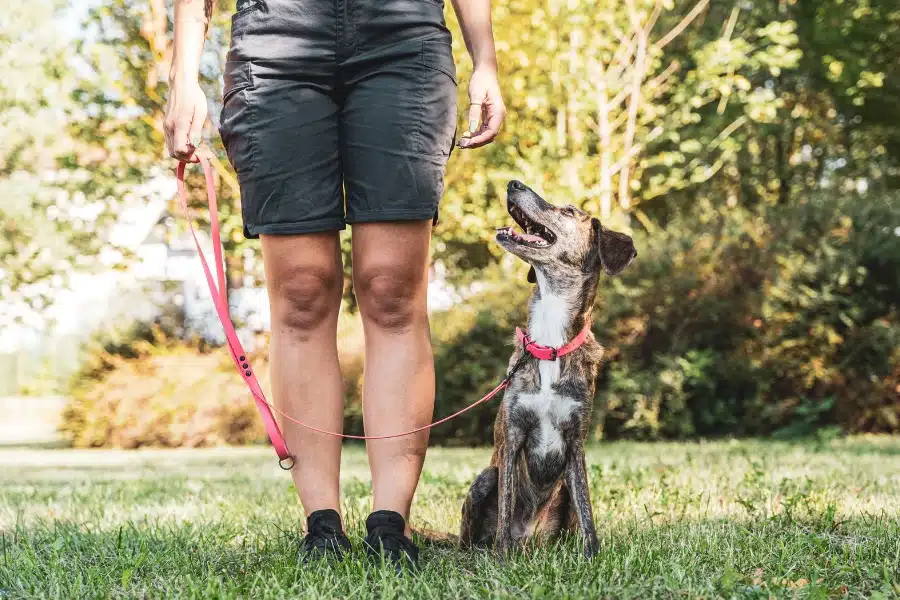
Training can be a potent tool in managing hyperactivity in dogs. Regular training sessions help dogs learn to focus, follow commands, and even learn when it’s time to be active and when it’s time to be calm. Obedience training can also help manage any behaviors that may arise as a result of hyperactivity, such as excessive barking or jumping.
Obedience classes offer the added benefit of socialization with other dogs and humans in a controlled environment. This interaction, combined with the structured learning, can go a long way in teaching a hyperactive dog how to behave appropriately. Professional trainers in these classes are also equipped to handle and guide dogs of various temperament types, including hyperactive ones.
Socialization

Interaction with other dogs and people can be an effective way to manage hyperactivity. Socializing exposes dogs to a variety of situations, experiences, and behaviors from other dogs, teaching them acceptable dog behavior. Interaction in parks, dog-friendly cafes, or playdates with other dogs can provide both physical exercise and mental stimulation.
When introducing a hyperactive dog to new environments or other dogs, it should be done gradually and positively. Negative experiences can lead to fear or aggression, rather than the calm behavior that is desired. If a dog is particularly energetic, initial introductions might be more successful after a bout of exercise when the dog is naturally calmer.
Consulting A Veterinarian Or Professional Behaviorist

Sometimes, despite the best efforts, a hyperactive dog may still struggle to find calm. In these cases, seeking help from a professional such as a veterinarian or a behaviorist can provide further strategies and solutions. They can offer expert advice and, if necessary, perform health checks to rule out any underlying medical conditions contributing to the hyperactivity.
Professionals can also provide guidance on the use of calming aids, such as anxiety wraps or pheromone diffusers. They can suggest training techniques that might be more effective or recommend diet changes that could help. Remember, it’s essential to consult with a professional before starting any form of medication or supplement to manage a dog’s hyperactivity.
The Bottom Line
Managing a hyperactive dog can be challenging, but with patience, consistency, and the right strategies, it is achievable. Regular exercise, mental stimulation, a consistent routine, a balanced diet, training, socialization, and professional help when needed are all crucial factors to consider. Remember, every dog is unique and what works for one may not work for another. It might take some time and a lot of trial and error, but finding the right balance can significantly improve the quality of life for both the dog and their human companions.