Contents
Practice Closing The Door

Once your pup gets comfortable and can play and sleep in the crate for at least 30 minutes, you can start to teach them that they can’t get out when the door is closed. If your dog starts crying or whining while you’re trying to close the door, resist the urge to open it up right away. Wait until they are quiet for a few minutes before letting them out.
If you have an older pup, you may have to leave the room or go outside and close the door so that they can’t follow you. The idea is to make sure that your pup understands that they can’t get out of the crate until you let them.
Start Stepping Away For Short Periods Of Time
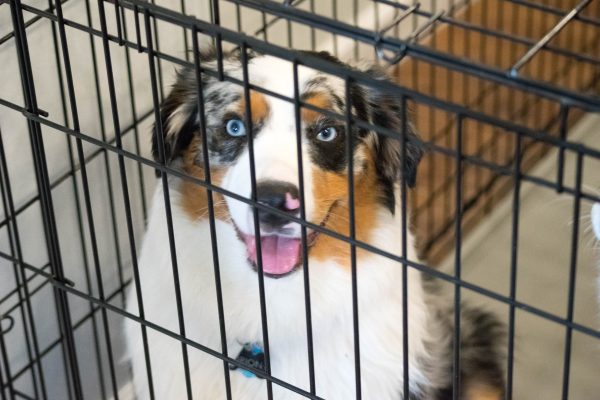
Once your pup has grown comfortable with being in the crate, you can start to step away for short periods. Your dog may be confused when you first begin this process, as they will learn that being quiet and calm gets them out of the crate, but being noisy will only prolong their stay. If they are having a tantrum about it, sit outside or on the other side of a door so that they can’t see you.
Eventually, you’ll be able to leave the house for a few hours while your puppy remains in the crate without any problem. Ensure to give them plenty of water and bathroom breaks during this time, as they won’t be able to go to the bathroom in the crate.
Work Your Way Up To Longer Periods

When your pup can spend several hours in the crate without any significant complaints or accidents, you will be ready to try leaving them there all night. Take things very slowly for this process, as it can cause some anxiety and stress for both you and your dog if not done correctly.
As always, start by putting them in the crate for a short period and gradually increasing the time. If they seem to be doing well, you can try leaving them there for a few hours overnight. If they have any accidents, go back to leaving them in the crate for shorter periods until they can hold it for a more extended time.
Some Tips
Make Sure They Have A Good View

Many dogs get anxious when crated because there isn’t much to look at outside the crate door. If your puppy or dog can’t see you, it can feel like they have been abandoned and left alone. To avoid this feeling, make sure that your pup can see you through the side or front of the crate.
Make The Crate A Positive Experience

The key to successful crate training is making the crate a positive experience for your puppy. If your dog is afraid of the crate, it will be harder to get them to use it. Some easy ways to make the crate a good place include giving your pup a bed or blanket to curl up on, putting their food and water inside, and giving them plenty of toys.
You can also let your pup come and go from the crate as they please, but always make sure to close it up before you leave and let them out when they must go. If your pup feels afraid of the crate, this will help them get used to it faster than if it’s something they hate.
Never Punish Your Dog For Crying In The Crate

Suppose your pup is crying or barking while in the crate; it’s not because they hate it. It’s because they don’t like being away from you and want to come out. Don’t ever punish your pup for this by making them stay in longer. Instead, wait until your dog is quiet and then let them out.
Conclusion
In conclusion, crate training is a great way to train your pup and ensure that they have a safe place to go. It’s important to remember that every dog is different and will take an additional amount of time to crate train properly. Be patient and consistent with your puppy, and they will eventually learn that the crate is a safe and comfortable place for them to be.